Showing posts with label technology. Show all posts

Monday, 10 March 2014

Nokia X launched in India for Rs 8,599: Nokia’s first Android phone available from today

Nokia has launched its first Android device for India at an event in Mumbai. The Nokia X will be available from today for Rs 8,599. That price is slightly higher than the Rs 8,500 tag it was expected to sport, and could be the major factor in the final equation, Nokia is positioning the X series below its Lumia line, but above the Asha range, so it is expected to bridge the gap between the two price points. It must be noted that the price announced is the MOP (Market Operative Price) of the phone, so the box price (or MRP) is higher.

While the Nokia X has been launched, the company didn’t launch the X+ or the XL in India. Both are expected to launch in the next couple of months. The Nokia X run Android, but the login and app data is tied to Microsoft’s cloud services, and not Google as in any other Android phone. The phones run a version of Android Open Source Project, with access to sideloading of apps, third-party app stores and Nokia’s own store. You will find Microsoft essentials instead of Google services. Users will get one month of free Skype calls to mobiles and landlines when they purchase the Nokia X.

The Nokia X features a 4-inch display with a 800×480 pixel resolution. It sports a low-powered Snapdragon S4 SoC with dual-core processor, which given the other specs should be enough for most use cases. The dual-core processor is clocked at 1GHz. There’s 512MB of RAM on the Nokia X, and it has 4GB internal storage and the ability to take in microSD cards up to 32GB in capacity.

The Finnish company has decided to go with a 3-megapixel primary shooter, and there’s no front-facing camera. That’s a bit of a disappointment for the selfie-obssessed and Skype users, though you can still use Skype on the phone. The Nokia X gets a 1500 mAh battery, rated for around 13 hours of talk time on 2G and 17 days standby time. In terms of connectivity, the X and X+ have dual SIM slots, 3G cellular data, Wi-Fi b/g/n and Bluetooth 3.0.
MUMBAI: The NSE Nifty extended its winning streak and hit a fresh life-time high even as the Asian markets remained weak. The S&P BSE Sensex also hit a fresh all-time high and breached psychological 22,000 mark on the back of strong foreign inflows.

According to analysts, the bull market is likely to continue and any deep correction should be used as an buying opportunity in beaten down quality stocks.

"After crossing new highs, the situation in the market could well t ..

MUMBAI: The NSE Nifty extended its winning streak and hit a fresh life-time high even as the Asian markets remained weak. The S&P BSE Sensex also hit a fresh all-time high and breached psychological 22,000 mark on the back of strong foreign inflows.

According to analysts, the bull market is likely to continue and any deep correction should be used as an buying opportunity in beaten down quality stocks.

"After crossing new highs, the situation in the market could well t ..

Tuesday, 25 February 2014

MWC2014: First look – Samsung Galaxy S5, Gear 2, Gear Fit


The company has unveiled its new Galaxy S5 smartphone, which is set to go on sale in April, along with a pair of watches. And many of the features included on the devices focus on fitness.

Considering America's continued fascination with personal health and health-related products, this is probably a good idea. What Samsung has attempted to do is combine the best attributes of the top-of-the-line fitness trackers currently on the market with those of its own phones and smartwatches.

The S5 and the watches were unveiled at an event at the Mobile World Congress wireless show in Barcelona, Spain. I had a chance to briefly test out all three products in New York on Monday.

The S5 includes a built-in heart rate monitor, pedometer and fitness tracker, though I'm not sure how useful they actually are. For instance, to check your heart rate, you hold your finger over a sensor on the back of the phone - something I can't imagine doing in the middle of a jog.

True fitness buffs will probably head straight for Samsung's Gear Fit smartwatch, which also does all of those things, but in a much more user-friendly way. Want to check your heart rate? Just open up the app for that and it gives you a reading within seconds.

While many people have become accustomed to wearing fitness bands either constantly or for their workouts, I think a lot of them would balk at going running with, or perpetually being tethered to, a phone as big as the S5.

It's worth mentioning too that the Fit Gear is very nicely styled. I have to admit, I wasn't a fan of Samsung's first Galaxy Gear smartwatch, because it felt heavy and clunky and was just too big for a normal-sized woman's wrist. But the Fit solves that problem. It's thin, light and features a curved color screen. If you don't mind wearing something like a Fitbit Force or a Nike FuelBand, you won't mind this product either.

The trade-off is you can't place or answer a call from the Fit, but it will notify you of things like calls, emails and text messages. There's also no camera.

Samsung's new Gear 2 watch also comes with basic fitness features including the heart rate monitor and pedometer. While it's still too chunky for me, it is significantly lighter and thinner than the original version.

Unlike the Fit, you can still place calls from it and shoot pictures and video from its camera. But are those features really important? It was tough to shoot a decent picture with the original watch's camera and making or taking a call from the phone wasn't easy either, especially with any kind of noise in the background.

One nice change is that unlike Samsung's first smartwatch, the new ones pair with a host of Samsung phones, giving consumers more options for their primary device.

Samsung also plans to introduce a slightly cheaper version called the Gear 2 Neo, which won't have a camera or come in as many colors. The company has yet to announce pricing for any of the new products.

Fitness aside, the S5 phone includes some other significant upgrades from its predecessor. Some of the biggest changes are in its camera. Its 16 megapixels make it sharper than the S4, which had just 13. It's also designed to focus faster and lets you blur the foreground or background of an image to emphasize a subject.

The phone also has a fingerprint sensor to use in place of a passcode to unlock the phone or make mobile payments. And it is splash and dust resistant, which is bound to prolong the phone's life for many people.

An added incentive for parents is the phone's "Kids Mode," which lets you hand your phone off to your child without fear that they'll stream something inappropriate from your Netflix cue or access your email.

In short, the S5's improvements might be enough to entice current Samsung fans to upgrade their devices, while its fitness features could draw some converts as well, especially those interested in purchasing a smartwatch to go along with it.

Tuesday, 7 February 2012

Amazing Futuristic aircraft designs of Nasa

Our ability to fly at supersonic speeds over land in civil aircraft depends on our ability to reduce the level of sonic booms. NASA has been exploring a variety of options for quieting the boom, starting with design concepts and moving through wind tunnel tests to flight tests of new technologies.

This rendering of a possible future civil supersonic transport shows a vehicle that is shaped to reduce the sonic shockwave signature and also to reduce drag.

Future aircraft design concept for supersonic flight over land


Northrop Grumman's concept is based on the extremely aerodynamic "flying wing"

Boeing's advanced vehicle concept centers around the familiar blended wing body design like the X-48

The "double bubble" D8 Series future aircraft design

The "Icon-II" future aircraft design

The Hybrid Wing Body H-Series future aircraft design

This computer rendering shows AMELIA (Advanced Model for Extreme Lift and Improved Aeroacoustics)


This computer-generated image shows a possible future "flying wing" aircraft

Monday, 6 February 2012

Ferrari's new F2012 Formula One car

These photos made available by the Ferrari , shows the new F2012 Ferrari Formula One car with which the Italian car maker will compete in the next season of the Formula 1 World Championship.

The new Ferrari carbon-fibre and honeycomb composite structure singleseater sports an eight cylinder, 2398 cm3, V 90∞ engine for a total weight of 640 kilograms. The F2012 is the fifty eighth car built by Ferrari with the express purpose of taking part in the Formula 1 World Championship.


Monday, 16 January 2012

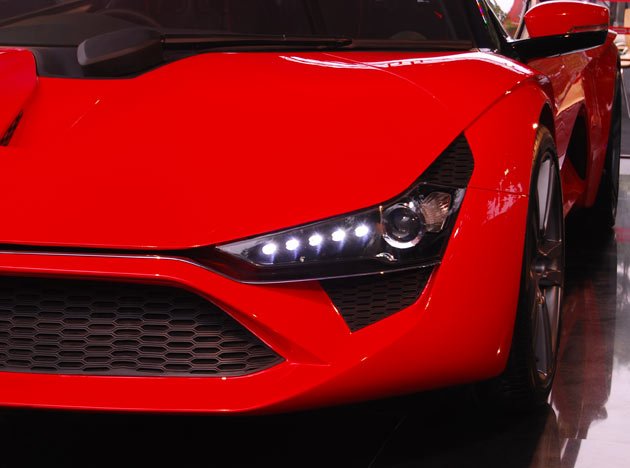
India's first Super car : DC Avanti

The well known Indian automotive design house, DC Design has unveiled its supercar called the Avanti. According to reports, the car has been named after the Studbaker Avanti that appeared in Tintin comics. The idea behind the Avanti, which means 'forward' in Italian, is to make affordable supercars and the car is expected to be priced at Rs 30 lakh, it was reported.

The Avanti is expected to do a sub-seven second zero to hundred timing. These engines are mated to a 6-speed dual-clutch transmission system. According to the reports, the engines are being tuned in the UK and will be shipped to India in crates where they will be installed the cars. Much like the engines, most of the other components that go into the cars will also be imported into the country.


DC Design is also setting up showrooms across the country in order to sell the Avanti Supercar

Specifications of the car: Engine


Type: 2.0L Four Cylinder
Maximum power: 240 BHP @ 5500 RPM
Maximum Torque: 270lb/ft of torque @3500 RPM
Transmission: MMT6 6speed
Turbocharged engine with direct injection and VVT DOHC Four valves per cylinder


Chassis

Tubular space frame
Jig built
TIG welded
Suspension
Unequal length double wishbones
Coil cover shock absorbers
Steering and Brakes
Rack and pinion
330 mm ventilated discs (Front and Rear) AP racing calipers Wheels
Front rim size - 8.5J-19
Tyres - 255/35 19” x 8.5 J
Track - 1680 mm
Rear Rim size - 11J-19
Tyres - 295/30 19” x 11 J
Track - 1660 mm

Dimensions


Wheelbase - 2700 mm
Length - 4623 mm
Width - 1967 mm
Height - 1213 mm
Front Over hang - 993 mm
Rear Over hang - 930 mm
Ground clearance - 155 mm
Dry kerb weight - 1562 kgs

Wednesday, 11 January 2012

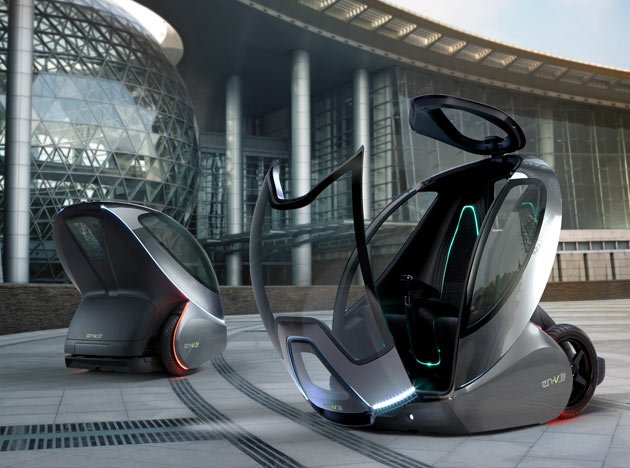
Impressive EN-V for tomorrow's traffic congestion

GM is exploring several solutions for tomorrow’s drivers. Among the most promising is a new vehicle called EN-V short for Electric Networked-Vehicle, maintains the core principle of personal mobility – freedom.EN-V is a two-seat electric vehicle that was designed to alleviate concerns surrounding traffic congestion, parking availability, air quality and affordability for tomorrow’s cities.EN-V is propelled by electric motors in each of its two driving-mode wheels.

Power for the motors is provided by lithium-ion batteries that produce zero emissions. By combining the Global Positioning System (GPS) with vehicle-to-vehicle communications and distance-sensing technologies, the EN-V concept can be driven both manually and autonomously. Its autonomous operating capability offers the promise of reducing traffic congestion by allowing EN-V to automatically select the fastest route based on real-time traffic information.


Tuesday, 20 December 2011

The most expensive Wazuma V8 have engine of Ferrari, handlebars of BMW

With a top speed of 241km/h, the one-off Wazuma V8, built by French company Lazareth, is so powerful it is only permitted to be driven off-road.The bike boasts a Ferrari engine with 250bhp and handlebars from a BMW M3.

It is up for sale on luxury website JamesList. And with a price tag of $266,000, you would have to be Bruce Wayne to afford it.Weighing in at a relatively light 650kg, the expensive vehicle is able to reach travel at high speeds.Its makers say the powerful 250bhp engine means its can reach more than 150pmh on the clock.

A spokesperson for the company said: 'The Wazuma offers matchless driving sensations with a unique design. It is designed to be simple, aggressive and high-performance. It is first of all a masterpiece of engineering, a sculpture.'

The quad bike is on the market for a staggering $266,000

It is capable of more than 150mph thanks a 250bhp engine and a weight of just 650kg


Makers Lazareth have put the one-off machine for sale on the luxury website Jameslist

Engine from a Ferrari and gearbox from a BMW M3

Thursday, 8 December 2011

The most expensive superyacht ever, comes with a limousine on deck

This huge superyacht is so sleek you'd almost be forgiven for mistaking it for a floating limousine.This is no coincidence - the 'Sovereign' yacht is based on the design of a limo, and even comes with its own matching car.

And the vessel fit for a king could be yours, if you're willing to shell out a mere $132million - that's £85million.For that modest outlay, the happy owner also gets furniture designed by Armani, as well as a swimming pool and golfing green.

This picture shows the glass helipad and circling infinity pool which the lucky owner can enjoy

'We thought about a typical person on board one of these yachts and asked: how do they travel on land? Well - limousine,' company boss Eduard Gray told CNN. 'It's a very unique concept in the yacht world.'

The company claims that the boat's unusual design 'gives her an extremely low profile' - but a look at the yacht's extra features may suggest otherwise.

Sovereign's shape was inspired by that of a limousine, and it comes with a car of the same design


Designers Gray Design say the boat will be low-profile, but these computer-generated images may perhaps suggest otherwise

This 100-metre superyacht, which comes with an onboard garage

There is a glass helicopter pad, encircled by an infinity pool; 10 guests suites as well as the extensive main quarters; a private cinema; and a nightclub area which epitomises 'elegance and class' - according to Gray Design, at least.

The architects are also installing a golfing green, which can be converted into a god play area for an owner who preferred playing with pets to playing sport.And of course there's an onboard garage, to store the matching limousine which is an optional extra, or whatever other car the owner feels is necessary to zip around the decks.

Armani are said to be involved with designing the ship's interior furnishings

The yacht goes up to a maximum of 30 knots - fairly nippy for a vessel of this size, but perhaps a little disappointing for real petrolheads hoping to transfer to seafaring.

Sunday, 27 November 2011

NASA launched Largest-ever robotic explorer : Atlas 5 Mars Rover

A United Launch Alliance Atlas V rocket carrying NASA's Mars Science Laboratory (MSL) Curiosity rover lifts off from Launch Complex 41at Cape Canaveral Air Force Station in Cape Canaveral, Florida. The rocket will deliver a science laboratory to Mars to study potential habitable environments on the planet.


A United Launch Alliance Atlas 5 rocket carrying NASA's Mars Science Laboratory Curiosity rover


The biggest, most sophisticated robotic explorer ever built.The rover examines a rock on Mars with a set of tools

This artist concept shows NASA's Mars Science Laboratory Curiosity rover, a mobile robot for investigating Mars' past or present ability to sustain microbial life. Curiosity is being tested in preparation for launch in late 2011. In this picture, the rover examines a rock on Mars with a set of tools at the end of the rover's arm, which extends about 2 meters (7 feet).

Two instruments on the arm can study rocks up close. Also, a drill can collect sample material from inside of rocks and a scoop can pick up samples of soil. The arm can sieve the samples and deliver fine powder to instruments inside the rover for thorough analysis.

A "sky crane" lowers the Mars Science Laboratory Curiosity rover onto the surface of Mars

Tuesday, 15 November 2011

Honda unveils new concept cars

Honda Motor Co., Ltd. announced its lineup of production and concept-model automobiles, motorcycles, power products, and other highlights for its display at the 42nd Tokyo Motor Show 2011.

A micro-sized, futuristic, electric city commuter which will become a highly accessible form of mobility for more people. This vehicle will offer the joy of a new type of communications between people and mobility and an exterior that the owner can enjoy customizing more casually

Honda Concept car at the 42nd Tokyo Motor Show 2011


The collaboration of Honda's motorcycle and automobile R&D centers made it possible to load the MOTOR COMPO two-wheel EV commuter in this vehicle

A next-generation plug-in hybrid vehicle which offers a more comfortable and enjoyable time in the vehicle during all driving situations, from urban to long-distance driving

With the choices of an "engine drive mode" for more aggressive driving or an "automatic drive mode" for more relaxed driving, the vehicle broadens the joy of mobility

Wednesday, 2 November 2011

Place Where the Internet was born

UCLA's Interface Message Processor (IMP) (R) is pictured in the birthplace of the Internet, at 3420 Boelter Hall, the original location of the first ARPANET node at UCLA in Los Angeles, California June 2, 2011. UCLA professor Leonard Kleinrock and his team used the IMP, the packet-switching node used to interconnect participant networks to the ARPANET to send the first message, the letters LO to Stanford Research Institute on October 29, 1969.

The UCLA Department of Computer Science and Henry Samueli School of Engineering and Applied Science have collaborated in creating the Kleinrock Internet Heritage Site and Archive (KIHSA) with the center recreating the lab at its original site in 3420 Boelter Hall from which that first message was sent, which for years had been used as a classroom.The recreated lab will open October 29 with a reunion of the computer scientists responsible for the first message. Picture taken June 2, 2011.


UCLA professor Leonard Kleinrock and his team used the IMP, the packet-switching node used to interconnect participant networks to the ARPANET to send the first message, the letters LO to Stanford Research Institute on October 29, 1969.

A detailed view of UCLA's Interface Message Processor (IMP) is seen in a storage closet, where it had been stored for over 20 years, at 3420 Boelter Hall in UCLA, May 3, 2011.

A detailed view of UCLA's Interface Message Processor (IMP) is pictured in a storage closet, where it had been stored for over 20 years, at 3420 Boelter Hall in UCLA, May 3, 2011.

A detailed view of UCLA's Interface Message Processor (IMP) is pictured in a storage closet.


A blackboard with the letters LOG and LO, is pictured in 3420 Boelter Hall at UCLA, May 3, 2011.

UCLA's Interface Message Processor (IMP) is pictured in a storage closet, where it had been stored for over 20 years by UCLA professor Leonard Kleinrock and his team, at 3420 Boelter Hall in UCLA, May 3, 2011.

The original log book detailing UCLA professor Leonard Kleinrock and his team using the Interface Message Processor (IMP), is seen at 3420 Boelter Hall in UCLA, May 3, 2011.

A teletype similar to one used to communicate with the Sigma 7 computer which was connected to UCLA's Interface Message Processor (IMP) in the birthplace of the Internet.